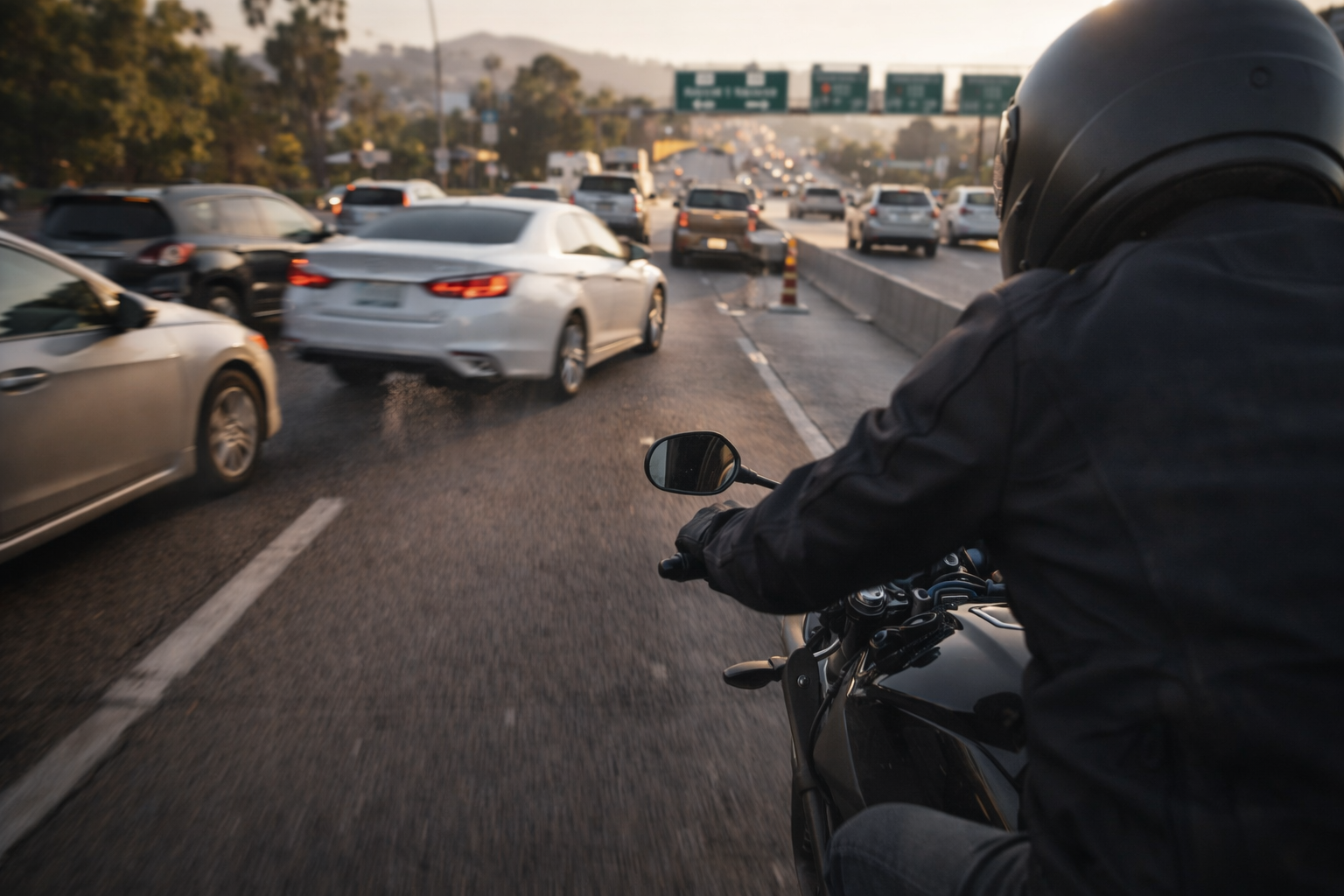
The Most Dangerous Moment for Motorcyclists in Los Angeles Isn’t Traffic — It’s the Gaps
Los Angeles traffic gets blamed for a lot of motorcycle accidents.
But after decades of riding in this city, I’ve learned something important:
Traffic itself isn’t the real danger.
The danger is what happens when traffic opens up.
The Real Danger Zone: When Cars See an “Opportunity”
When traffic is heavy, cars are locked in. There’s not much they can do, and riders can read the flow.
When traffic is light, there’s space, visibility, and predictability.
The real danger zone is in between.
That’s when drivers:
See a gap and rush into it
Accelerate unconsciously
Make sudden lane changes without checking surroundings
Cut across lanes without seeing motorcycles — or even other cars
It’s not panic.
It’s rush behavior.
Drivers get excited when they see space. They react quickly, not carefully.
I experienced this firsthand when a car entered an on-ramp, accelerated past me despite me having the right-of-way, and then abruptly slammed on the brakes due to traffic ahead. By the time they reacted, there was nowhere to go — and it caused an accident.
That moment wasn’t about reckless riding.
It was about last-second decisions made without awareness.
A Common Misunderstanding About Motorcycle Accidents
There’s a common belief that motorcycle accidents are always caused by reckless riders. The reality is more nuanced.
Yes — data shows that speeding on surface streets and taking turns too fast are among the leading contributors to motorcycle crashes. Riders have to own that.
But that’s not the full picture.
Many accidents happen in complex environments where:
Drivers don’t see motorcycles
Lane changes happen suddenly
On-ramps and merges compress reaction time
Visibility disappears in seconds
The truth is, most motorcycle accidents are preventable — through awareness, preparation, and better decision-making on all sides.
What non-riders often don’t see is how much riders are constantly scanning, anticipating mistakes, and managing risk in an environment that isn’t designed for them.
Motorcyclists aren’t careless — they’re exposed.
What Riders Rarely Think About Before an Accident
Most riders think about freedom, balance, and peace of mind.
Very few think about what happens after something goes wrong.
The Financial Impact
Accidents don’t just cause injuries — they disrupt lives.
Riders often aren’t prepared for:
Insurance coverage gaps
Uninsured or underinsured motorists
Delayed disability payments
Time away from work
Out-of-pocket medical costs
Waiting months (or longer) for settlements
There are insurance options that can help bridge these gaps — but most riders don’t learn about them until they need them.
The Mental Recovery
This is the part no one talks about.
Beyond physical recovery, riders face:
Loss of confidence
Trauma and hesitation
Identity shifts
Anxiety about riding again
Fear of not being able to provide for family
No one plans for losing mobility, independence, or how an accident affects the people closest to them.
Why Asphalt Angels Exists
Asphalt Angels wasn’t created from theory — it came from experience.
For over 27 years, I’ve helped injured riders by:
Visiting them in hospitals
Guiding them toward the right attorneys
Helping negotiate medical bills
Assisting with disability paperwork
Helping secure short-term financial support
Connecting people with job opportunities after recovery
This support used to happen informally — through phone calls, personal connections, and word of mouth.
Asphalt Angels exists so riders don’t have to navigate recovery alone.
It’s riders helping riders — with real-world guidance, not slogans.
The Facts: Motorcycle Safety in Los Angeles & California
In California, motorcycles make up about 3% of registered vehicles, but account for over 14% of traffic fatalities (California Office of Traffic Safety).
Speeding and unsafe turning are consistently among the top contributing factors in motorcycle crashes.
A significant percentage of fatal motorcycle accidents involve other vehicles failing to yield or changing lanes improperly.
Helmet use dramatically reduces the risk of fatal head injury by nearly 40% (NHTSA).
Many riders involved in serious accidents report long-term financial and psychological impacts, even when injuries heal.
Awareness Changes Outcomes
This isn’t about fear — it’s about preparation.
Understanding danger zones, anticipating driver behavior, protecting yourself financially, and preparing mentally can make a real difference.
That’s where Asphalt Angels comes in.
If you want to learn more or support the mission, visit:
RidersHelpingRiders.com
Asphalt-Angels.org
Because the goal isn’t just to ride — it’s to make it home.